
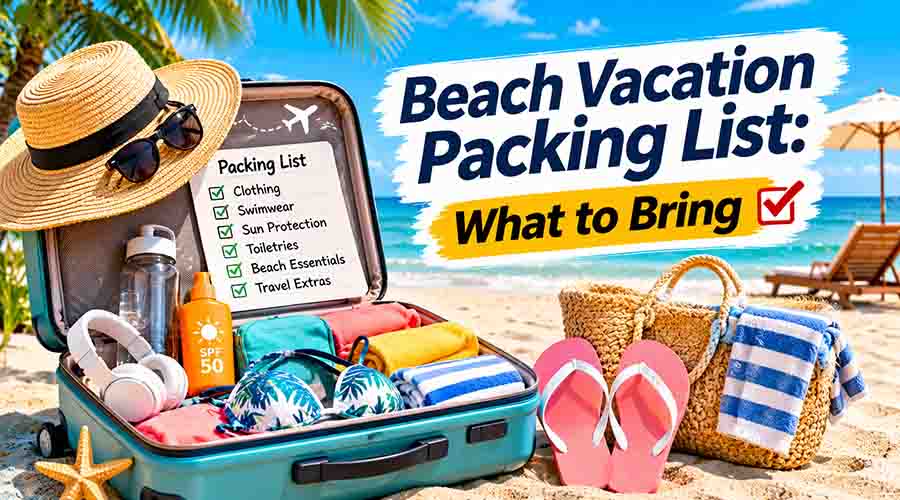
Beach Vacation Packing List: What to Bring (Complete Checklist)
A beach vacation looks easy to pack for. It’s only swimsuits and sunscreen, right? Then you arrive and realize the sunscreen is the wrong kind, your only swimsuit is still wet, the sand is too hot to walk on, and your phone has no protection from the water. A good packing list for a beach vacation solves those small problems before they spoil a day in the sun.
This guide covers everything to bring for a beach trip, organized by category, with expert-backed advice on sun protection, a carry-on vs. checked bag guide, packing quantities by trip length, a list of what to leave at home, and a complete checklist you can follow as you pack.
What Should You Pack for a Beach Vacation?
The essentials are swimwear, a broad-spectrum water-resistant sunscreen with SPF 30 or higher, sunglasses with 100% UV protection, a wide-brimmed hat, a cover-up, flip-flops or sandals, a beach bag, a quick-dry towel, a reusable water bottle, insect repellent, your medications and your travel documents.
After that, add items based on your destination and plans: water shoes for rocky beaches, a waterproof phone pouch, snorkel gear, after-sun lotion and a light layer for breezy evenings.
Beach Vacation Packing List at a Glance
| Category | Must-Pack Items | Nice to Have |
|---|---|---|
| Sun protection | SPF 30+ water-resistant sunscreen, UV-blocking sunglasses, wide-brimmed hat, lip balm with SPF | Rash guard or UPF shirt, after-sun gel |
| Swimwear | 2–3 swimsuits, cover-up | Swim shorts for activities, swim goggles |
| Clothing | Light, breathable tops and shorts or skirts, one evening outfit, light layer | Linen pants, sarong, light rain jacket |
| Footwear | Flip-flops or sandals, one pair of walking shoes | Water shoes |
| Beach gear | Beach bag, quick-dry towel, reusable water bottle | Snorkel mask, dry bag, beach mat |
| Toiletries & health | Insect repellent, medications, basic first-aid kit | Aloe vera gel, anti-chafe balm, oral rehydration salts |
| Tech | Phone, charger, power bank (carry-on only), waterproof phone pouch | Plug adapter, e-reader, action camera |
| Documents & money | ID or passport, booking confirmations, insurance details, cash and cards | Copies of documents, a zip-lock bag to keep them dry |
Sun Protection: The Most Important Part of Your Beach Packing List
Sun exposure at the beach is stronger than many people expect, because water and sand reflect UV light. Pack these items first.
Sunscreen
The American Academy of Dermatology (AAD) recommends a broad-spectrum, water-resistant sunscreen with SPF 30 or higher, reapplied every two hours outdoors and after swimming or sweating. A few points beach travelers often miss:
- No sunscreen is waterproof. “Water-resistant” means it stays effective on wet skin for 40 or 80 minutes, as shown on the label.
- Pack more than you think you’ll need. Most adults need about one ounce of sunscreen, enough to fill a shot glass, to cover their whole body. One application a day for two people uses up a standard bottle fast.
- Apply it about 15 minutes before going outside, and don’t forget your ears, the tops of your feet, the back of your neck and your hairline.
- Check the expiry date on last year’s bottle before packing it.
Reef-Safe Sunscreen
If you’ll swim or snorkel near coral reefs, consider sunscreen made without oxybenzone and octinoxate. These are two chemicals linked to coral damage, and Hawaii has banned the sale of sunscreens containing them since January 2021. Some other destinations have similar rules. There’s no single official standard for “reef-safe,” so check the ingredient list rather than relying on the label alone. Mineral sunscreens use zinc oxide or titanium dioxide instead.
Sunglasses
The American Academy of Ophthalmology advises choosing sunglasses that block 99–100% of UVA and UVB rays. A label saying “100% UV protection” or “UV400” means the same thing. Price and lens darkness don’t tell you how much UV a pair blocks. Polarized lenses cut glare from water and sand, which makes beach days more comfortable, but they don’t add UV protection on their own.
Hat and Sun-Protective Clothing
- A wide-brimmed hat shades your face, ears and neck better than a cap.
- A rash guard or UPF-rated shirt protects your shoulders and back during long swims or snorkeling, which are the areas that burn most often.
- A lip balm with SPF prevents painful sunburned lips.
After-Sun Care
Pack aloe vera gel or an after-sun lotion to soothe skin after a long day outdoors. It’s cheap insurance against a miserable night.
Swimwear and Beach Clothing
How Many Swimsuits Should You Bring?
Two or three swimsuits work for most trips. This lets one dry while you wear another, which matters in humid places where swimwear dries slowly. Add a pair of athletic swim shorts or a sports swimsuit if you’re planning surfing, kayaking or snorkeling.
Cover-Ups
A cover-up such as a sarong, kaftan, long shirt or light dress is essential for walking from the beach to cafés, shops and hotel lobbies. Many beach restaurants and towns expect you to cover up away from the sand.
What Clothes to Pack
Choose lightweight, breathable, quick-drying fabrics like linen, cotton blends and moisture-wicking synthetics. Light colors stay cooler in the sun.
- Daytime: T-shirts or tank tops, shorts, skirts or light dresses
- Evening: one or two smarter outfits for dinners
- Layers: a light sweater, overshirt or jacket for breezy evenings, air-conditioned restaurants and flights
- Rain: a light rain jacket or packable poncho if you’re traveling in the rainy season
- Sleepwear and underwear: one set per day, or fewer if you’ll do laundry
Respect local dress norms. In some destinations, swimwear is fine on the beach but not in town, at markets or near religious sites. At more conservative beaches, many visitors swim in shorts and T-shirts or modest swimwear. Check local guidance before you go.
Beach Footwear
| Footwear | Why You Need It |
|---|---|
| Flip-flops or slides | Hot sand, showers, pool decks and quick trips to the beach |
| Water shoes | Rocky shores, coral, shells, sea urchin areas and very hot sand |
| Walking sandals or sneakers | Sightseeing, hikes to viewpoints and long walks |
| Dressier sandals (optional) | Evenings out |
Three pairs is enough for most trips. Shoes take up more suitcase space than almost anything else.
Beach Gear and Accessories
- Beach bag or tote: big enough for towels, water and sunscreen. Waterproof or sand-resistant fabric helps.
- Quick-dry or microfiber towel: many hotels provide beach towels, so check before packing a bulky one. A microfiber towel is still useful for day trips and wet swimsuits.
- Reusable water bottle: you’ll need to drink more in the heat. An insulated bottle keeps water cool.
- Waterproof phone pouch: protects your phone from splashes and sand, and lets you take photos in the water.
- Dry bag: useful for boat trips, kayaking and island hopping.
- Snorkel mask and tube (optional): rentals are often available, but your own mask fits better and is more hygienic.
- Beach mat or sand-free blanket (optional): lighter than a towel for lounging.
- Zip-lock or wet bags: for wet swimsuits, sandy items and keeping documents dry.
- Entertainment: a book or e-reader and playing cards. If you bring a speaker, keep the volume considerate.
Usually rent instead of pack: beach umbrellas, beach chairs, surfboards, paddleboards and kayaks. Most popular beaches have rental stands.
Toiletries and Health Essentials
Toiletries
Pack your usual toiletries, plus a few beach-specific items:
- Sunscreen for face and body
- Insect repellent
- Aloe vera or after-sun gel
- Shampoo and conditioner (salt water and sun dry out hair, so a leave-in conditioner helps)
- Anti-chafe balm (useful for long walks in the heat)
- Deodorant
- Hair ties and a comb or brush
- Biodegradable wipes
Carry-on liquids: At many airports, liquids, gels and creams in carry-on bags must be in containers of 100 ml (3.4 oz) or less, packed in one small clear bag. In the US this is the TSA’s 3-1-1 rule. Pack full-size sunscreen and toiletries in checked luggage, or buy them when you arrive. Rules can differ between airports, so check your departure airport before you pack.
Insect Repellent
Mosquitoes and sand flies are common in many coastal areas, especially at dawn, dusk and in tropical destinations. Pack an EPA-registered insect repellent or one with a recognized active ingredient. When using both products, the CDC advises applying sunscreen first, then insect repellent.
Beach First-Aid Kit
- Adhesive bandages and antiseptic wipes or cream (for cuts from rocks and shells)
- Pain relief and fever medication
- Antihistamine (for insect bites and allergies)
- Motion sickness tablets (for boat trips)
- Oral rehydration salts (for heat and stomach upsets)
- Any prescription medications, in their original packaging, with enough for the whole trip plus a few extra days
For international trips, check whether you need vaccines or other health preparation well before you go. Our travel packing list has a full health and first-aid checklist.
Tech, Documents and Money
Electronics
- Phone and charger
- Power bank: pack it in your carry-on. The FAA prohibits spare lithium batteries and power banks in checked bags, and you must remove them if your carry-on is checked at the gate.
- Waterproof phone pouch
- Plug adapter if you’re traveling abroad
- Optional: e-reader, headphones, an action camera
Documents and Money
- Passport or national ID
- Flight, hotel and activity confirmations
- Travel insurance policy number and emergency phone line
- Credit or debit cards, plus some local cash for beach vendors, boat rides and tips
- Digital and paper copies of important documents
Keep valuables safe: At the beach, bring only what you need, such as a phone, a card and a little cash. Leave passports and spare cards in your hotel safe.
Carry-On vs. Checked Bag: Where to Pack What
| Pack in Your Carry-On | Pack in Your Checked Bag |
|---|---|
| Passport, ID and documents | Full-size sunscreen and toiletries |
| Medications | Extra swimsuits and clothing |
| Power bank and spare batteries | Water shoes and extra sandals |
| Phone, charger, headphones | Snorkel gear |
| One swimsuit and a cover-up (so you can swim even if your bag is delayed) | Beach towel or mat |
| Small sunscreen (100 ml or less) | After-sun lotion |
| Sunglasses | Insect repellent (if over 100 ml) |
How Much to Pack: By Trip Length
| Item | Weekend (2–3 days) | One Week | Two Weeks |
|---|---|---|---|
| Swimsuits | 2 | 2–3 | 3 |
| Cover-ups | 1 | 1–2 | 2 |
| Tops | 3 | 5–6 | 7 (plan laundry) |
| Shorts, skirts or dresses | 2 | 3–4 | 4–5 |
| Evening outfits | 1 | 2 | 2–3 |
| Light layer | 1 | 1 | 1–2 |
| Pairs of shoes | 2 | 2–3 | 3 |
| Sunscreen (body) | 1 travel-size or shared bottle | 1–2 full bottles | 2–3 full bottles |
These are guidelines for one person. Adjust based on laundry access, your activities and how often you change.
What Not to Pack for a Beach Vacation
| Leave at Home | Why |
|---|---|
| Expensive jewelry | Easy to lose in sand and water, and a theft risk |
| Too many shoes | Heavy and bulky; three pairs are usually enough |
| Full-size toiletries you can buy locally | Weight and liquid limits |
| Heavy jeans and thick fabrics | Hot, slow to dry and bulky |
| Beach umbrellas and chairs | Usually available to rent |
| Bulky towels (if the hotel provides them) | Take up a lot of space |
| Unnecessary valuables | One less thing to worry about at the beach |
Beach Vacation Packing Tips
- Pack a swimsuit in your carry-on. If your checked bag is delayed, you can still swim on day one.
- Use packing cubes: one for swimwear, one for daywear and one for evening clothes.
- Bring a wet bag to keep damp swimsuits away from dry clothes.
- Roll lightweight clothes to save space and reduce creases.
- Leave space for souvenirs and the extra sunscreen you might buy.
- Check the weather and season before you pack. Rainy and windy seasons call for a rain jacket and a warmer layer.
- Check what your accommodation provides, such as beach towels, a hairdryer, toiletries or snorkel gear.
- Make a list and tick it off. Create a custom list for your destination, trip length and activities with the free Travel Packing List Generator.
Beach Safety Tips to Pack in Your Head
What you pack matters, but so does how you use the beach:
- Swim near a lifeguard whenever possible, and check the beach warning flags. The US National Weather Service recommends this as the best protection against rip currents.
- If you’re caught in a rip current, don’t swim against it. Swim parallel to the shore until you’re out of the current, then swim back to land.
- Drink water regularly, even if you don’t feel thirsty.
- Take shade breaks during the hottest part of the day.
- Never swim alone, and watch children closely near the water at all times.
Example: Packing for a Cox’s Bazar Beach Trip
Here’s how the list adapts to a specific destination. Cox’s Bazar in Bangladesh has one of the world’s longest natural sea beaches and a mix of sandy and rocky shores.
- Water shoes: useful at Inani Beach, where the shoreline has rocks and coral stones.
- Modest swimwear or quick-dry clothes: many local visitors swim in everyday clothes, and covering up away from the beach is expected.
- Light rain jacket: essential if you visit during the monsoon months.
- Cash: handy for beach vendors, rickshaws and short rides.
- Sunscreen, hat and sunglasses: the sun reflects strongly off the wide, flat beach.
Read our Cox’s Bazar travel guide for the best time to visit, things to do and local tips, or ask other travelers about the best time to visit Cox’s Bazar on the Travluno forum.
Complete Beach Vacation Packing Checklist
Sun protection
- Broad-spectrum, water-resistant sunscreen, SPF 30+
- Sunglasses with 100% UV / UV400 protection
- Wide-brimmed hat
- Lip balm with SPF
- Rash guard or UPF shirt
- Aloe vera or after-sun gel
Swimwear and clothing
- 2–3 swimsuits
- Cover-up
- Light tops, shorts, skirts or dresses
- 1–2 evening outfits
- Light layer for evenings and flights
- Rain jacket (rainy season)
- Sleepwear and underwear
Footwear
- Flip-flops or slides
- Water shoes (rocky or coral beaches)
- Walking sandals or sneakers
Beach gear
- Beach bag
- Quick-dry towel (if not provided)
- Reusable water bottle
- Waterproof phone pouch
- Dry bag and wet bag
- Snorkel mask (optional)
Toiletries and health
- Insect repellent
- Toiletries (100 ml or less in carry-on)
- Prescription medications
- First-aid kit and motion sickness tablets
- Oral rehydration salts
Tech, documents and money
- Phone, charger and power bank (carry-on)
- Plug adapter
- Passport or ID
- Booking confirmations and insurance details
- Cards and some local cash
Frequently Asked Questions
What should I pack for a beach vacation?
The essentials are swimwear, a broad-spectrum water-resistant sunscreen with SPF 30 or higher, sunglasses with 100% UV protection, a wide-brimmed hat, a cover-up, flip-flops or sandals, a beach bag, a quick-dry towel, a reusable water bottle, insect repellent, your medications and your travel documents.
How many swimsuits should I bring on a beach vacation?
Two or three swimsuits work for most trips. This lets one dry while you wear another, which matters in humid places where swimwear dries slowly.
What SPF sunscreen is best for the beach?
The American Academy of Dermatology recommends a broad-spectrum, water-resistant sunscreen with SPF 30 or higher. Reapply it every two hours, and after swimming or sweating.
Can I bring sunscreen in my carry-on?
Yes, but at many airports, liquids, gels and creams in carry-on bags must be in containers of 100 ml (3.4 oz) or less, packed in one small clear bag. Pack larger bottles in checked luggage or buy sunscreen at your destination, and check your departure airport’s current rules.
What should I not bring on a beach vacation?
Leave expensive jewelry and unnecessary valuables at home, and keep important documents in your hotel safe. Avoid packing too many shoes, full-size toiletries and bulky items you can usually rent locally, such as beach umbrellas and chairs.
Do I need water shoes for a beach vacation?
Water shoes are worth packing if your beach has rocks, coral, shells or very hot sand. They protect your feet while you swim and walk, and they dry quickly.
What is reef-safe sunscreen?
Reef-safe usually describes sunscreen made without oxybenzone and octinoxate, two chemicals linked to coral damage. Hawaii has banned the sale of sunscreens containing them since January 2021. There is no single official standard for the term, so check the ingredient list rather than relying on the label alone.
Conclusion: Pack Light, Protect Your Skin, Enjoy the Water
The best beach packing list isn’t the longest one. It covers the few things that really matter: strong sun protection, enough swimwear to rotate, the right shoes for your beach, a way to keep your phone and documents dry, and basic health supplies. Everything else is optional, and much of it can be rented or bought when you arrive.
Ready to pack? Create a personalized checklist in seconds with the free Travel Packing List Generator, plan your beach days with our travel itinerary template, and get destination tips from fellow travelers on the Travluno Travel Forum.

Travluno
Travluno shares practical travel guides, destination ideas and tips to help travelers explore with confidence.